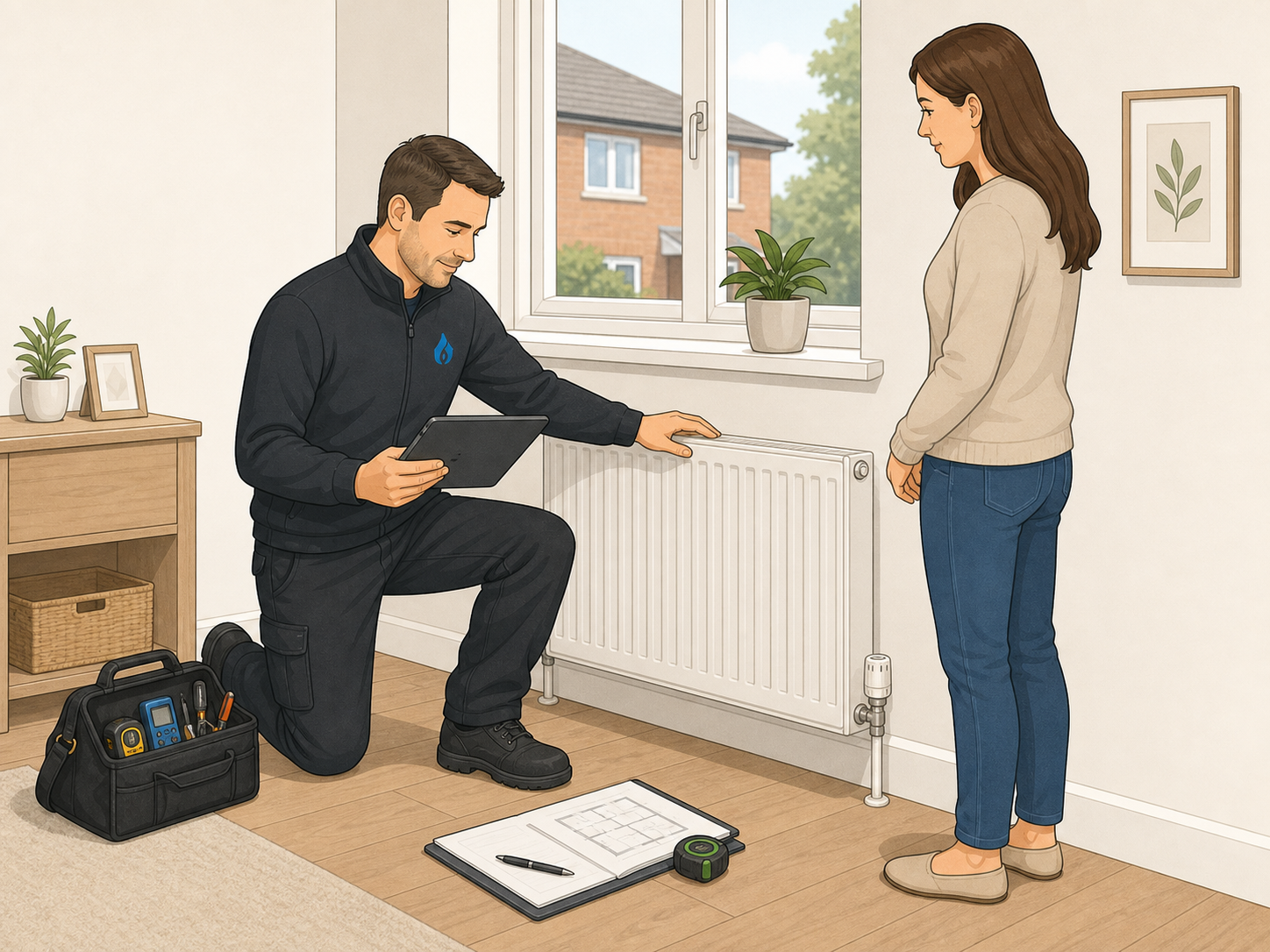
Suitability - CheshireIs your Cheshire home ready for a heat pump?
Short answer: A Cheshire home is more likely to be ready for a heat pump when the heat loss, radiators, hot water setup, controls, outdoor space and household expectations have all been checked together.
A heat pump is not just an outdoor unit. The survey looks at heat loss, emitters, hot water, controls and how the home is used.
Read guidanceSurvey - Cheshire and Greater ManchesterWhat happens during a heat pump survey?
Short answer: A heat pump survey checks whether the whole heating system can work well with a heat pump, including room heat loss, radiator capacity, hot water needs, controls, electrics and outdoor unit position.
The survey is where the proper design work starts: heat loss, radiators, cylinder, controls, access and customer priorities.
Read guidanceGrants - UKHeat pumps, grants and realistic expectations
Short answer: Heat pump grants can reduce the upfront cost for some homes, but eligibility depends on the current scheme rules, the property and the heating system being replaced, so it must be checked before relying on it.
Grants can be useful, but they should be handled carefully. The right answer depends on the property and current rules.
Read guidanceHow it works - UK homesHow does an air source heat pump actually work?
Short answer: An air source heat pump moves heat from outside air into the home using refrigerant and a compressor, then delivers it through a heating system designed for lower, steadier flow temperatures.
A heat pump moves heat rather than creating it like a boiler. The key homeowner difference is lower flow temperatures and a system designed around steady comfort.
Read guidanceRadiators - Cheshire and Greater ManchesterWill my radiators need changing for a heat pump?
Short answer: Some radiators need changing for a heat pump and some do not; the answer depends on whether each room can stay warm at lower heat pump flow temperatures after heat loss and radiator output are checked.
Some homes need radiator upgrades and some do not. The design checks whether each room can stay warm at heat pump-friendly temperatures.
Read guidanceHot water - UK homesWhat happens to hot water with a heat pump?
Short answer: Most heat pump homes use a hot water cylinder, so the right setup depends on household demand, shower and bath use, cylinder space, recovery time and how hot water is used day to day.
Hot water is part of the design, not an afterthought. Cylinder size, shower use and household routines all affect the right setup.
Read guidanceNoise - Neighbour-aware installsAre heat pumps noisy?
Short answer: Modern heat pumps are generally designed to run quietly, but the final noise impact depends on the unit, location, nearby windows, boundaries, airflow and how the installation is planned.
Modern heat pumps are designed to run quietly, but position still matters. The survey considers neighbours, bedrooms, boundaries and airflow.
Read guidanceOlder homes - Cheshire homesDo heat pumps work in older homes?
Short answer: Heat pumps can work in some older homes, but suitability depends on heat loss, insulation, draughts, radiator capacity, hot water demand and realistic comfort expectations.
Older homes are not automatically ruled out. Insulation, heat loss, radiator sizes, hot water and expectations all need checking properly.
Read guidanceDay to day - Homeowner adviceWhat is it like living with a heat pump?
Short answer: Living with a heat pump usually feels different from living with a boiler because the system is set up for steady comfort, lower flow temperatures and sensible controls rather than short blasts of high heat.
A well-designed heat pump is usually about steady comfort rather than short blasts of heat. The controls and daily habits can feel different at first.
Read guidanceRunning costs - UK homesHow much does a heat pump cost to run?
Short answer: Heat pump running costs depend on the home, heat loss, system design, electricity tariff, controls and heating habits, so a trustworthy installer should avoid promising a fixed bill figure from a web page.
Running costs depend on the home, design, electricity tariff, controls and heating habits. It is not something to promise from a quick web page.
Read guidanceChoosing an installer - Cheshire and Greater ManchesterWhat should I ask before choosing a heat pump installer?
Short answer: Before choosing a heat pump installer, ask how they check heat loss, radiator sizing, hot water, controls, outdoor unit position, handover and aftercare, and how those checks affect the final proposal.
The right installer should be able to explain heat loss, radiator checks, hot water design, controls, handover and aftercare in plain English.
Read guidanceHeat Geek - Cheshire homesWhy use a Heat Geek installer for your heat pump?
Short answer: A Heat Geek installer should bring a design-first approach to heat pumps, checking the home, heat loss, radiators, hot water, controls and handover instead of treating the job as a simple appliance swap.
A Heat Geek-led route puts the design first: heat loss, emitters, hot water, controls and handover before anyone treats the outdoor unit as the whole job.
Read guidance